The Bay Forager is entirely self-funded. No ads, no paywalls, just research and time. If a piece like this is useful to you, a small tip helps me keep writing and keeps everything here free to read.
Leave a tipI often get comments on my videos, whether serious or joking, saying things like 'my dog peed on that before you ate it' or 'you shouldn't eat that, it has car exhaust all over it.' I have strong opinions about these comments, but I have mostly ignored them because I was never 100% certain the science backed me up. So let's walk through the pollutants people worry about on foraged food and see how my intuition stacks up against the research. Consider this the stuff I have wanted to say for a while.
My Gut Reaction, Before Reading Anything
Dog Pee
Really? You are worried about dog pee? I am pretty sure most of us have smoked worse stuff.
Car Exhaust
This stuff is mostly a gas, right? Besides, we are breathing it in every day.
Pesticides
Why in the world would anyone spray pesticides on weeds? Pesticides are used to protect the food crops we grow on purpose, not the weeds.
Herbicides
OK, maybe this one is real. I could imagine getting unlucky and eating something right after an area was sprayed, but the odds seem pretty low. Besides, I eat non-organic fruits and vegetables all the time.
Heavy Metals
This one is a big 'it depends.' From what I understand, different plants and mushrooms absorb different amounts of heavy metals depending on the soil and environment. As long as you forage from a variety of areas throughout your life, you should not consume too many heavy metals from foraged food.
Overall Thoughts
The dose makes the poison. I am not living solely on foraged food, maybe only 100 g a day. Even if every one of these points is a real issue, there is no way I am eating enough for any of it to matter, right? Foraging is also an alternative to the grocery store, and that supply chain pollutes the environment (heavy metals, car exhaust) and creates a lower quality habitat for all of us. That last part is speculation and probably not very testable, but it is worth thinking about.
What the Science Says
Dog Pee
Leptospirosis is a little scary. Dogs can carry it without symptoms and pass it to humans, and roughly 10% of reported cases are fatal. The odds of catching it, though, are incredibly low. Only about 1,000 cases were reported in the US between 2014 and 2020, and the majority were tied to direct handling of animals and their bodily fluids (Atherstone et al., 2025). I have not found any literature linking foraging to transmission of this disease.
Producing urine does concentrate certain compounds, including pesticides. One study found that dogs raised around herbicide-treated lawns had elevated levels of these chemicals in their urine, and related research links lawn chemical exposure to a higher risk of bladder cancer in dogs. However, this work studied the dogs, not the plants they peed on (Knapp et al., 2013). If you live somewhere with lots of pesticide-heavy lawns and dogs, forage a trail where those dogs are regularly walked, and specifically harvest right at dog-pee height, then maybe you should worry. Those conditions seem rare.
Car Exhaust
'Car exhaust' technically means only what comes out of the tailpipe, but the more useful question is broader: can we forage from the side of the road? That version also includes brake dust and the other debris shed by cars and trucks.
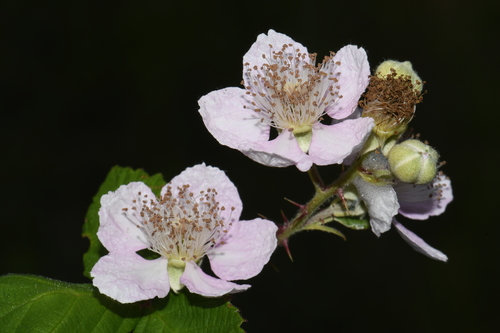
There is a remarkably relevant study on exactly this. Researchers measured copper, lead, and cadmium in blackberries growing near a roundabout in the UK. They found heavy metals, of course, but reported that you would have to eat a kilogram (2.2 lbs) of those blackberries every day for it to be a problem. I have been known to finish a 20 lb watermelon in a couple of days, but nobody is eating that many blackberries, and the season would not even allow it. They also found that washing removed at most 50% of the heavy metals, with typical values closer to 10 to 40% (Chamberlain et al., 2024).
Wild blackberries collected from the roadside were suitable for human consumption, although the findings are not representative of all foraged berries or road networks.
Chamberlain et al., 2024
Berries and heavy metals are not the only worry. Polycyclic aromatic hydrocarbons (PAHs) come out of vehicle exhaust and may be the real concern for roadside foragers. One review pulled together studies that measured PAHs in roadside plants, mostly leafy greens, which should accumulate the most. The results ranged wildly, from zero PAHs in some plants to very high levels in plants that were not even near a road (Hubai et al., 2024). There is also no established safe level for PAHs. They sound scary, and maybe they are, but you are already exposed to them in cigarette smoke, smoked meats, and campfires, so the level of risk is yours to decide.
Some leafy vegetables can accumulate these toxic materials in significant quantities.
Hubai et al., 2024
Pesticides
This one is fun. I think when people say 'pesticides' they are not thinking about what the word actually means. Pesticides kill pests, and you spray them where pests threaten something valuable: the food crops we grow on purpose. The research shows pesticide risk on foraged food in rural, sprayed settings, not urban ones.
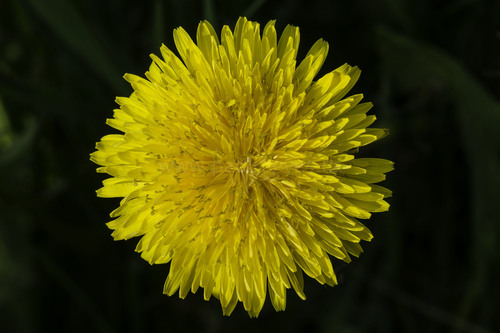
A great study ran in Berkeley, Oakland, and Richmond in 2019. Researchers collected wild greens and, among other things, screened them for hundreds of pesticides. They found zero pesticides and zero PCBs (Stark et al., 2019). By contrast, when researchers tested dandelions growing in vineyards that had been sprayed, they found residues, exactly as you would expect. Even then, the pesticides were seasonal and tracked with the spraying schedule (Skubic et al., 2025). Do not forage a non-organic field if you want organic forage.
Pesticides, glyphosate, and PCBs were below detection limits.
Stark et al., 2019
Herbicides
Have you ever used an herbicide? Within a day, and sometimes within a couple of hours, the sprayed plants look clearly sad. Some forage is resistant, though. Horseweed is a pleasant, tarragon-tasting edible and was also the first plant observed to evolve resistance to glyphosate. Personally, I do not want to eat anything that is wilting or growing next to wilting plants, which I think is a good rule of thumb. The science is even more reassuring than my intuition: in that same East Bay study, the scientists found no herbicides on any of the foraged greens (Stark et al., 2019).
Heavy Metals
Many of the roadside studies, plus the East Bay work, clearly find heavy metals in foraged food. Lead in particular belongs to a group of pollutants that arguably should never be present at any level, yet there is no way to live as a human and avoid lead entirely, so the EPA sets practical limits. Unless you are eating several pounds a day from an unlucky, high-contamination area, and from plants that happen to be good metal accumulators, you should be fine (Stark et al., 2019; Chamberlain et al., 2024).
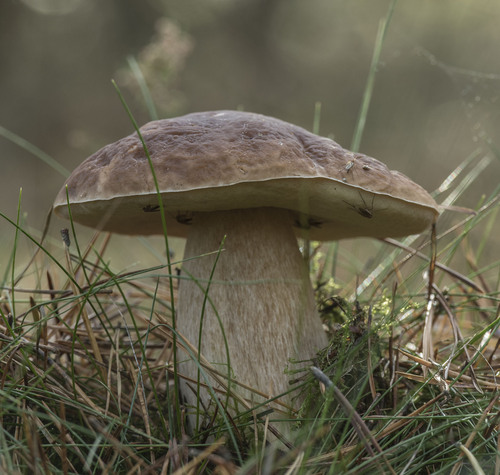
You may have heard that fungi are great bioremediators. Mycelium, the body of the fungus, can spread for miles underground and pull contamination out of the soil. That is wonderful for the planet and unfortunate for foragers. Some soil-dwelling mushrooms are especially good at concentrating heavy metals. In one market study, a 10 g serving of dried Porcini delivered about 76% of the daily mercury limit, while another species delivered under 3% (Orywal et al., 2021). You would still have to eat a lot of mushrooms for this to become a real problem, but heavy metals in mushrooms are a genuine concern, and the variation is enormous. As with plants, the species, the location, and the conditions create a huge range of accumulated toxins. To stay extra safe, favor saprobic (wood-loving) fungi growing far from anywhere humans have disturbed, and avoid old mining sites and farms.
The consumption of 10 g of dried Boletus edulis provided 76% of the daily dose of Hg, reaching the maximum value of more than 135%, whereas the range for Xerocomus badius was much lower (1.4 to 4.1%).
Orywal et al., 2021
Overall Thoughts
So everyone was right. Yes, dog pee, pesticides, herbicides, and heavy metals all show up in foraged food. The real question is how much we should care. Run the same analysis on fast food, junk food, or even your local farmers market, and I suspect you would get similar results. My take is still that the dose makes the poison. Am I going to stop eating food from the side of the road? No, but I am also not eating several pounds of roadside blackberries a day. Am I going to stop mushroom foraging because of heavy metals? No, but I will pick from a diverse set of locations and stay aware of old farms and mining operations. Did writing this change anything? A little. It scared me just enough that I will now harvest at least 2 ft back from the trail edge, just to be safe. If foraged food scares you, that is your call, but a little lead and dog pee is not going to stop me.
A Note on AI
AI helped me find relevant articles and with some light editting, but it did not write any of this material. Every study and claim here was reviewed by hand.
Works Cited
- Atherstone, C., Galloway, R., Schafer, I., et al. (2025). Epidemiological, temporal, and geographic trends of leptospirosis in the United States, 2014 to 2020. PLOS Neglected Tropical Diseases, 19(8), e0013427. https://doi.org/10.1371/journal.pntd.0013427
- Chamberlain, L. K., Scott, H., Beddoe, N., & Rintoul-Hynes, N. L. J. (2024). Heavy metal contamination (Cu, Pb, and Cd) of washed and unwashed roadside blackberries (Rubus fruticosus L.). Integrated Environmental Assessment and Management, 20(6), 2107 to 2115. https://doi.org/10.1002/ieam.4981
- Hubai, K., Kovats, N., & Eck-Varanka, B. (2024). Urban gardening: how safe is it? Urban Science, 8(3), 91. https://doi.org/10.3390/urbansci8030091
- Knapp, D. W., Peer, W. A., Conteh, A., et al. (2013). Detection of herbicides in the urine of pet dogs following home lawn chemical application. Science of the Total Environment, 456 to 457, 34 to 41. https://doi.org/10.1016/j.scitotenv.2013.03.019
- Orywal, K., Socha, K., Nowakowski, P., et al. (2021). Health risk assessment of exposure to toxic elements resulting from consumption of dried wild-grown mushrooms available for sale. PLOS ONE, 16(6), e0252834. https://doi.org/10.1371/journal.pone.0252834
- Skubic, M., Baca Cesnik, H., Velikonja Bolta, S., Rusjan, D., & Sircelj, H. (2025). Is common dandelion (Taraxacum officinale agg.) foraged for food in vineyards pesticide residues free? Foods, 14(4), 684. https://doi.org/10.3390/foods14040684
- Stark, P. B., Miller, D., Carlson, T. J., & de Vasquez, K. R. (2019). Open-source food: nutrition, toxicology, and availability of wild edible greens in the East Bay. PLOS ONE, 14(1), e0202450. https://doi.org/10.1371/journal.pone.0202450